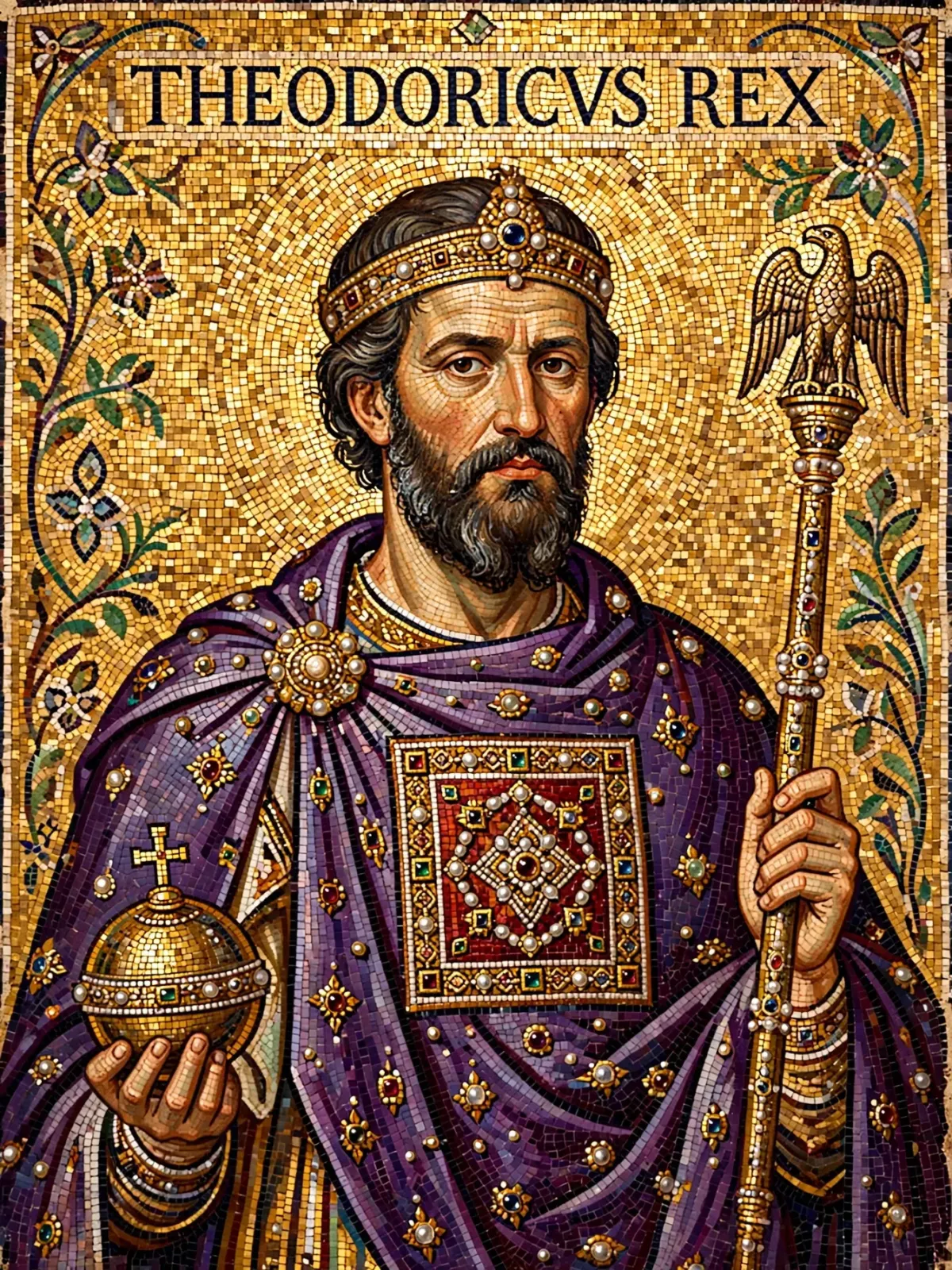
Legacy of the Amal: Unlocking the History of Theodoric the Great and Our Paternal Heritage
When exploring historical records and encyclopedias, few figures capture the complex drama of Late Antiquity quite like Theodoric the Great (c. 454–526 CE). As king of the Ostrogoths and ruler of Italy, Theodoric bridged the ancient Roman world and the emerging medieval era, leaving an indelible mark on European history.
For our family history, tracing these deep historical branches opens up an astonishing connection: genealogical records indicate that Theodoric the Great connects directly to our paternal side as a distant ancestor.
Let's dive into the historical archives, the encyclopedic records, and the fascinating life of one of history's most compelling rulers.
Who Was Theodoric the Great?
Born around 454 CE, Theodoric was the son of the Ostrogothic chieftain Theodemir. Early in his life, following Germanic-Roman custom, young Theodoric was sent to Constantinople as a royal hostage to ensure a treaty between his people and the Eastern Roman Empire.
During his decade in the imperial capital, he received a comprehensive Greco-Roman education and learned the intricacies of politics, military strategy, and statecraft—though historical accounts note he remained famously unconcerned with calligraphy, leaving traditional writing largely to his scribes.
Upon returning to his people, he succeeded his father as king and quickly proved himself a formidable military commander and diplomat.
The Conquest of Italy and Rule from Ravenna
In 488 CE, backed by the Eastern Roman Emperor Zeno, Theodoric led the Ostrogoths into Italy to depose King Odoacer. After years of conflict and a strategic siege at Ravenna, Theodoric secured control of the Italian peninsula, establishing a dual reign that balanced Gothic military might with traditional Roman civil administration.
Key elements of his 33-year reign included:
Civilitas and Peace: Theodoric heavily promoted civilitas (civilized life), maintaining internal peace, fostering trade, and enforcing legal protections for both Goths and Romans.
Public Works: He restored aqueducts, drained marshes, and cultivated devastated farmlands. His magnificent stone mausoleum in Ravenna still stands today as a marvel of ancient architecture.
Cultural Patronage: Although an Arian Christian ruling over a largely Trinitarian population, he initially championed religious tolerance and surrounded himself with brilliant minds like the Roman philosopher Boethius.
The Connection to Our Paternal Lineage
Genealogical research into ancient lineages often bridges mythology, early medieval chronicles, and documented royal houses. According to traditional genealogical charting, including data found in comprehensive family tree archives, Theodoric the Great sits as a distant ancestor on our paternal family line.
Connecting to a figure of Late Antiquity highlights the incredible migration, survival, and endurance of our ancestors through centuries of shifting empires, the fall of Rome, and the shaping of modern Europe. Unlocking these paternal roots turns abstract textbook history into a deeply personal story of heritage and legacy.
Why Theodoric Still Captivates Historians
Modern encyclopedias and works like the World History Encyclopedia emphasize that Theodoric was much more than a "barbarian king". He was a visionary leader who attempted to preserve the fading light of Roman civilization while establishing a powerful Gothic kingdom that stretched across Europe.
Whether remembered in medieval German legend as Dietrich von Bern or studied by historians as a master statesman, his legacy continues to fascinate scholars and descendants alike.
Uncovering these ancestral ties gives us a rare window into the past—reminding us that our family tree is woven directly into the grand epochs of world history.