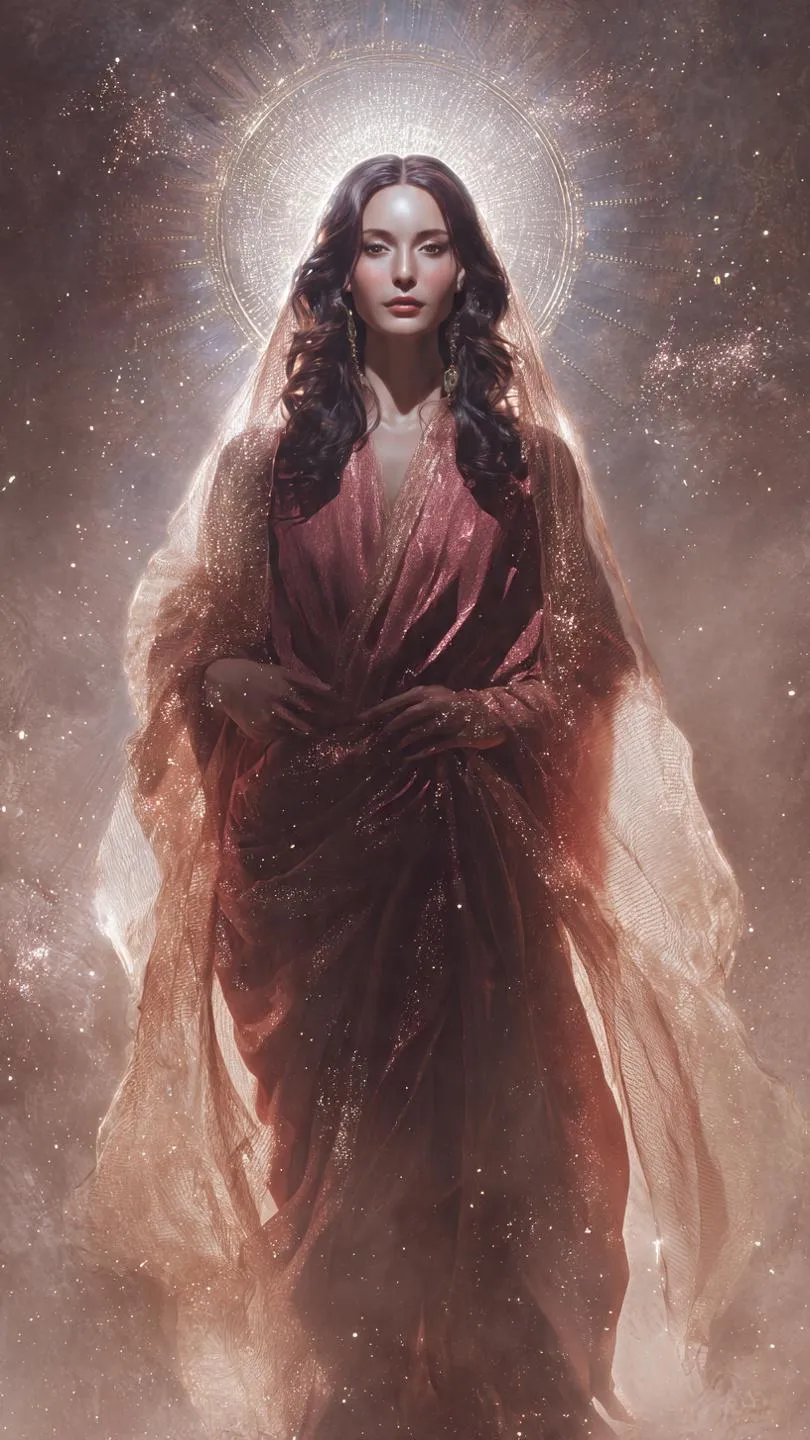
The Tower and the Fire: The Uncensored Legacy of Mary Magdalene
For nearly two millennia, the identity of Mary Magdalene has been held hostage by a single, shattering sermon. We have been taught to see her through a veil of tears—the "penitent prostitute," a woman whose only power lay in her shame and her subsequent redemption. But beneath the layers of ecclesiastical paint and centuries of institutional silence, a far more formidable figure is resurfacing. She was a woman of fire and authority, a primary pillar of the early movement, and—in the whispers of forgotten legends—the guardian of truths too wild to be tamed.
To know the "real" Mary is to bridge the gap between the historical shores of Galilee and the mythic caves of France, where the "Apostle to the Apostles" becomes the "Bearer of the Dragon."
The Names of the Tower
To understand Mary, one must understand the weight of the names she has carried. In the ancient world, a name was not just a label; it was a destiny.
Miriam of Magdala: Her Hebrew birth name. Magdala likely derives from Migdal, meaning "The Tower." This was not just a geographic marker but a title of spiritual elevation, suggesting she stood as a fortress of faith.
Apostola Apostolorum (Apostle to the Apostles): A title formally recognized by the Vatican in 2016, but whispered since the early church. She was the only person entrusted by the risen Christ to carry the message to the male disciples.
The Companion (Koinōnos): Found in the Gnostic Gospel of Philip, this term implies a deep spiritual partnership and an equal standing in the transmission of divine wisdom.
The Keeper of the Secret Path: In Gnostic circles, she was seen as the primary initiate who understood the "ascent of the soul" better than any other follower.
The Dragon Priestess: A folkloric and esoteric title arising from the legends of Provence, where she is seen as the master of the primal, serpentine forces of the earth.
The Penitent Sinner: The "False Name." Created in 591 CE by Pope Gregory the Great, this label successfully branded a leader as a social outcast for 1,400 years.
The Historical Foundation: The Financial and Spiritual Pillar
Historically, Mary of Magdala was an intellectual and spiritual powerhouse. Far from the marginalized figure often portrayed, she was central to the movement that changed the world.
The Financial Patron: The Gospels record that Mary provided for Jesus’ ministry "out of her own resources" (Luke 8:2-3). This reveals a woman of independent means and high social standing, likely a widow or an inheritor of wealth from the prosperous fishing town of Magdala.
The Unwavering Witness: While the male disciples fled in fear during the Crucifixion, Mary remained. She was present at the foot of the cross, at the burial, and she was the first to arrive at the empty tomb. Without her testimony, the foundational story of Christianity has no witness.
The First Messenger: By revealing himself first to Mary, Jesus bypassed the patriarchal norms of 1st-century society, where a woman’s testimony was not legally valid. This choice was a disruptive, revolutionary act of validation.
The Gnostic Secret: The Closest Initiate
Beyond the canonical record, suppressed texts suggest Mary was the closest and most intimate disciple of Jesus, possessing a spiritual affinity that the others struggled to comprehend.
In the Gospel of Mary, she is portrayed as a visionary leader who comforts and guides the disoriented apostles after the crucifixion. When Peter questions her authority, Levi (Matthew) defends her, stating, "If the Savior made her worthy, who are you to reject her? Surely the Savior knows her very well. That is why he loved her more than us."
She describes a complex spiritual path—the Ascent of the Soul—involving the overcoming of seven "powers" or egoic distractions. This suggests she received "Gnosis" (inner knowledge) reserved for those with the highest spiritual capacity. She was not just a follower; she was a co-creator of the spiritual message.
The Great Erasure: The 591 Decree
The distortion of Mary’s identity was not an accident; it was a calculated political move to suppress the authority of the sacred feminine. In 591 CE, Pope Gregory the Great publicly conflated Mary Magdalene with the unnamed "sinful woman" of Luke 7 and Mary of Bethany.
By merging these three distinct women into one "composite" character, the Church successfully:
Stripped her of leadership: A "prostitute" cannot lead a church.
Minimized her wealth: Her independent means were forgotten in favor of her "repentance."
Centered the narrative on shame: Her story became a tool for moral control rather than spiritual empowerment.
This erasure was fueled by the friction between Mary and Peter, representing a clash between a hierarchical, institutional vision (Peter) and a personal, intuitive spirituality (Mary).
The Mystery of the Dragon: The French Legacy
While the institutional Church sought to tame her, a wilder version of Mary survived in the folklore of Provence, France. Legend says that after the Ascension, Mary, Martha, and Lazarus fled to the shores of France, eventually settling in the mountains of St. Baume.
The Serpent of Gnosis: In esoteric thought, the dragon is not a monster to be slain, but a symbol of Sophia (Divine Wisdom). It represents the raw, primal power of the earth and the "fire" of the Holy Spirit.
Taming the Tarasque: While her sister, Saint Martha, is credited with subduing the dragon Tarasque with holy water and a cross, Mary’s role is more transformative. She is the "Dragon Priestess" who integrates the beast. She does not kill the dragon; she walks beside it, representing the mastery of the physical world through spiritual enlightenment.
The Cave of St. Baume: For 30 years, Mary allegedly lived in a cave, sustained by the songs of angels. This site remains a pilgrimage for those seeking the "hidden" Magdalene—the woman who left the world of men to commune directly with the Divine.
Why Her Story Matters Today: Reclaiming the Fire
Today, Mary Magdalene’s "dragon" represents the reclaimed authority of the feminine. It is a metaphor for the voice that refuses to be silent and the Christ Consciousness that lives within the heart, independent of any external dogma.
Reclaiming Mary Magdalene is about more than correcting a historical error; it is about restoring the Sacred Feminine to its rightful place. She represents a spirituality that values:
Intuition over Hierarchy: Knowing the truth in your heart rather than following a rulebook.
Gnosis over Dogma: Direct experience of the Divine rather than blind belief.
Balance over Domination: The integration of the "Dragon" (power) and the "Tower" (spirit).
Symbols of the Legacy
The Red Egg: A tradition where Mary proclaimed the resurrection to the Emperor. When he doubted, the egg in her hand turned red, symbolizing the life force of the truth.
The Alabaster Jar: Representing her devotion and the "perfume" of her wisdom.
The Rose: A long-standing esoteric symbol for the Magdalene and the "Hidden Rose" of the sacred lineage.
Closing Reflection
Mary Magdalene was never the shadow of a man; she was a light of her own. She stands at the threshold of history, inviting us to stop weeping at the tomb and start walking with the fire of our own truth. Whether we call her the Apostle, the Companion, or the Dragon Priestess, she remains the keeper of a sacred flame—a flame that reminds us that even two thousand years of silence cannot extinguish the soul of the one who truly knows.
Respectful Disclaimer
Historical Record Note: This article synthesizes canonical research with the esoteric and folkloric traditions. While her prominence as a disciple is a historical fact, her status as a secret initiate and "Dragon Priestess" is rooted in Gnostic mysticism and medieval legend.
Sources & Research:
Vortex Mythology: "The Secret of the Dragon Priestess"
Minds Unfettered: "The Hidden Truth of Mary Magdalene"
Gospel of Mary (Berlin Codex 8502)
Vatican Decree (2016): Feast of St. Mary Magdalene