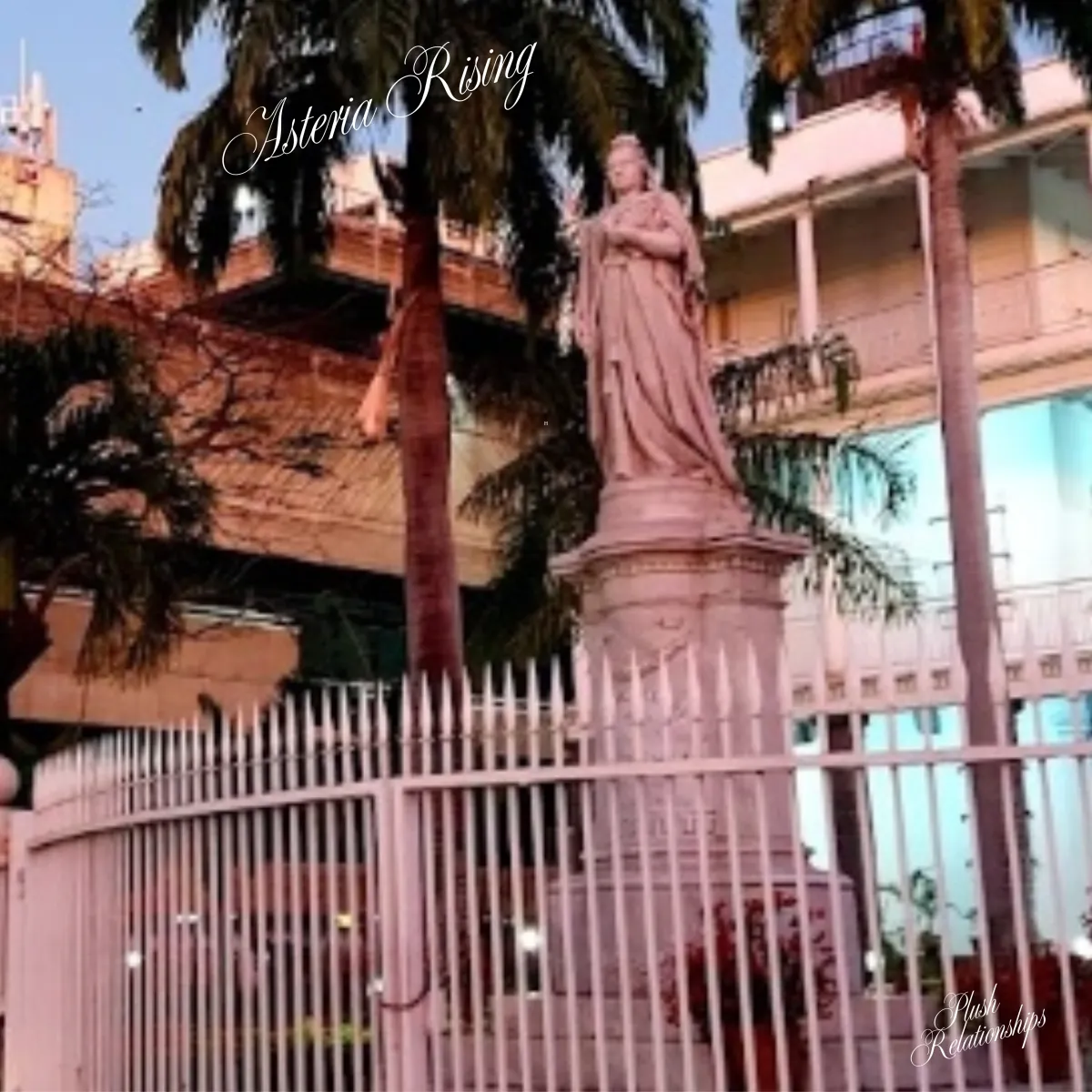
The Marble Monarch on the Move: The Tumultuous History of Georgetown’s Queen Victoria Statue
Public monuments are rarely just chunks of stone or metal; they are physical manifestations of history, politics, and power. Standing proudly—and controversially—outside the High Court in Georgetown, Guyana, is a striking marble monument to Queen Victoria. But behind its stoic expression and intricate Victorian drapery lies a turbulent, dramatic saga of explosions, exile, and ongoing debate.
A Royal Milestone in British Guiana
The story began in the late 19th century. Commissioned to commemorate the monarch’s Golden Jubilee, the statue was sculpted by English artist Henry Richard Hope-Pinker. By September 1894, it was officially unveiled outside what was then known as the Victoria Law Courts in British Guiana. Sculpted from fine white marble on a sturdy stone pedestal, the monument captured the Queen holding a scepter, draped in heavy, majestic robes with a veil cascading down her back. For decades, it stood as an unyielding symbol of the British Empire's reach in South America.
Dynamite, Defiance, and Exile
As the winds of anti-colonial change swept across the region, the statue became a lightning rod for local frustrations.
The 1954 Bombing: Amid rising political tensions and anti-colonial protests, the monument was targeted with dynamite. The explosion violently blew off the statue's head and left hand. The damaged figure was temporarily shipped back to England for extensive repairs before being reinstated.
Relocation to the Botanical Gardens: Following Guyana’s independence in 1966 and its transition to a Cooperative Republic in 1970, the young nation sought to shed symbols of its colonial past. The government removed the Queen Victoria statue from its prominent legal precinct, banishing it to a quiet, overgrown corner of the Georgetown Botanical Gardens. There, half-hidden by thick vegetation, she stood as a spectral relic of a bygone era rather than an object of public reverence.
A Controversial Return
For twenty years, the marble monarch remained tucked away in the greenery. However, history took another turn in 1990 when city authorities authorized its restoration and moved it back to its original pedestal outside the High Court.
The return sparked immediate conversation. To some, the restored statue is an important historical artifact that should be preserved as part of the country's complex timeline. To others, its prominent placement outside a modern judicial hub reopens old wounds regarding colonial subjugation.
A Living Monument to a Complex Past
Today, whether viewed as a piece of fine Victorian art, a target for protest, or a complex window into post-colonial identity, Queen Victoria’s statue in Georgetown refuses to be ignored. Its literal travels—from unveiling to bombing, banishment to botanical overgrowth, and restoration back to the city center—mirror the turbulent journey of a nation defining its own voice.
Ready to stop second-guessing your next chapter? Let the stars map your path forward.
Claim Your Destiny Compass Reading Here
Uncover the hidden threads of your family's history and decode your ancestral blueprint.
Explore the Lineage Codex & Support Asteria Rising Here
Need quick clarity, instant answers, or divine guidance?
Pull back the veil with a live reading or a custom yes/no pull.