The Tragedy of Lucy the Human Chimp: What Happens When We Blur the Line Between Species
Have you ever wondered what happens when humanity attempts to rewrite the blueprint of nature, treating a wild creature as a human child?
The true story of Lucy the Chimpanzee stands as one of the most poignant, complex, and tragic cross-fostering experiments in modern history. Far from a simple tale, Lucy's life forces us to examine the profound ethical boundaries between species, the weight of nurture versus nature, and what it truly means to belong to a family.
Raised Like a Human Child
Born in 1964, Lucy was taken from her mother at just two days old. She was adopted by Maurice Temerlin—a psychotherapist and professor at the University of Oklahoma—and his wife Jane. The Temerlins set out on a radical scientific and domestic adventure: to raise a chimpanzee as closely as possible to a human child.
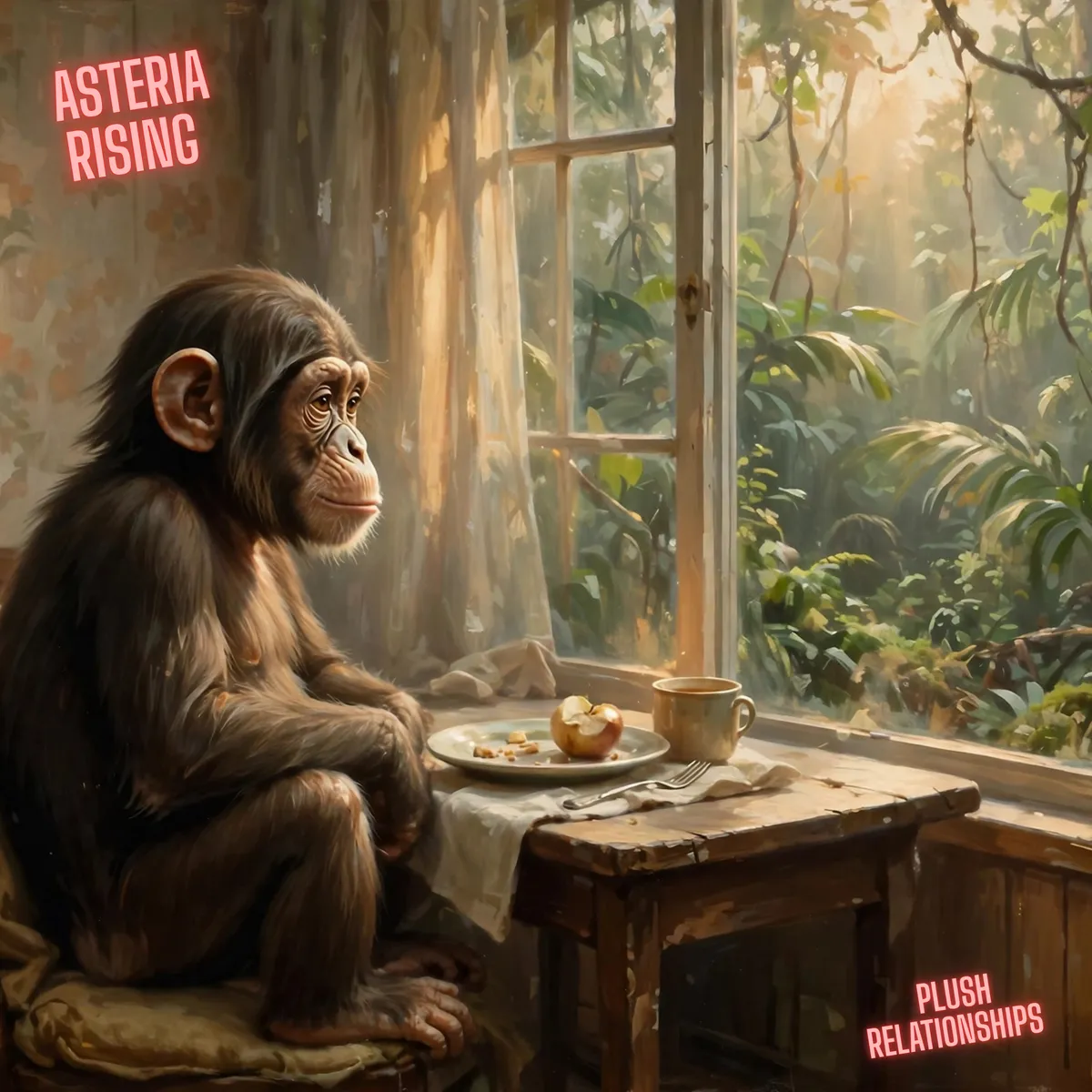
Human Comforts: Lucy lived inside a suburban American home, slept on a king-size mattress, dressed in human clothing, and sat at the dinner table using silverware.
Cultural Assimilation: She was taught American Sign Language (ASL) by primatologist Roger Fouts, eventually mastering around 140 signs. She even drank coffee, ate oatmeal with raisins, and occasionally enjoyed gin.
The Identity Crisis: Because she was completely isolated from her own kind during her formative years, Lucy identified entirely as human, showing severe fear and confusion when she was first introduced to a male chimpanzee.
The Reality Check of Puberty
By the time Lucy reached 12 years old, the experiment hit a dangerous physical reality: she had grown incredibly strong and increasingly destructive within the Temerlin household. What started as an academic inquiry into animal cognition became a heartbreaking domestic dilemma.
The decision was made to ship Lucy to a chimpanzee rehabilitation center in The Gambia, West Africa, in an attempt to return her to her native habitat. University of Oklahoma psychology graduate student Janis Carter accompanied Lucy to ease the transition. What was supposed to be a three-week trip turned into a multi-year odyssey.
The Struggle for Assimilation
Relocating to the African jungle proved devastatingly difficult for an animal who only knew human domesticity.
Severe Distress: Lucy suffered from immense depression, lost large patches of hair, and struggled deeply with unfamiliar foods and climate. Using sign language, she even expressed "hurt" to her human companions.
The Long Road to Freedom: Janis Carter dedicated years of her life living in remote conditions to help Lucy and other rescue chimps learn how to forage, recognize safe foods, and find their place in the wild.
What Lucy Teaches Us About Sovereignty
The legacy of Lucy the Human Chimp—chronicled extensively through scientific logs, memoirs, and documentaries like HBO's Lucy the Human Chimp—serves as a permanent reminder of the limits of forced adaptation. It highlights the danger of stripping any living being of its authentic blueprint. Whether examining animal ethics or the energetic boundaries of our own lives, Lucy's story asks us to respect the inherent design of nature rather than trying to force it into an unnatural mold.
Are you ready to honor authentic blueprints instead of forcing mismatched structures?
True alignment begins when you stop trying to fit into environments you were never designed for and start honoring your core nature.
Lucy's story is about what happens when a soul is raised outside the blueprint it was born for. If you're ready to come home to yours — tarot readings, Soulprint reports, Destiny Compass and more live here: https://plushrelationships.com/products-list
Resources & Further Reading
Maurice K. Temerlin, Lucy: Growing Up Human: A Chimpanzee Daughter in a Psychotherapist's Family (1975) — her foster father's own account of raising her; the primary source for the whole story
Lucy the Human Chimp (2021), documentary directed by Alex Parkinson, on Max — Janis Carter's first-person account of taking Lucy to The Gambia: https://www.max.com/movies/lucy-the-human-chimp/a3a428ec-409b-456c-bf21-b511c33b89fa
Radiolab, "Lucy" (WNYC, 2010) — the classic radio telling of her life, with Janis Carter: https://radiolab.org/podcast/91706-lucy
"Lucy (chimpanzee)," Wikipedia — her dates and details at a glance (1964–1987): https://en.wikipedia.org/wiki/Lucy_(chimpanzee)