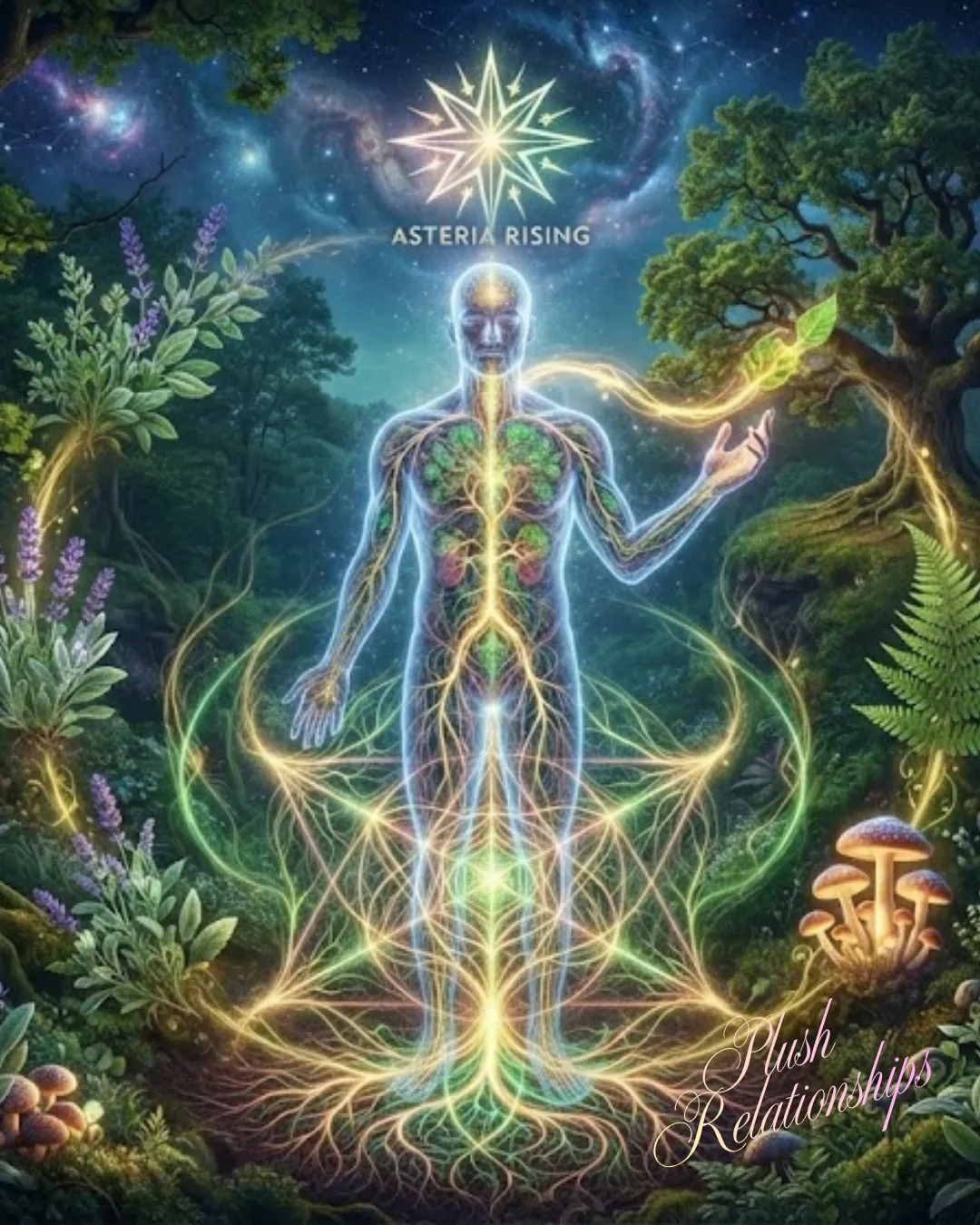
Discover the Plant Kingdom's Hidden Wisdom
To understand the plant kingdom is to understand the very foundation of Earth’s consciousness. They are not merely "decorations" or "resources"—they are the oldest, most sophisticated biological technology on this planet. To get 1000% honest about the plant kingdom is to admit that humanity has spent centuries viewing our greatest allies as mere commodities.
The Evolutionary Symphony
The plant kingdom did not simply "happen"; it is a masterclass in adaptation and energetic manifestation.
Long before humanity stepped onto the stage, plants were busy anchoring the light of the Sun into physical form. They evolved not just to survive, but to create the very atmosphere and vitality required for all other life to flourish. They are the conduits between the cosmic rays above and the mineral frequencies below, holding the architecture of life together through their root networks and silent, persistent intelligence.
The Truth About "Screaming" and Sentience
You’ve heard the myths—that plants "scream" when they are cut. Let’s look at the truth. Plants communicate through complex chemical signals, electrical impulses, and subterranean mycelial networks that function like a neural grid. When a plant is damaged, it sends out distress signals to its neighbors. Does it "scream" in the way a human does? Perhaps not in sound, but it resonates in frequency.
This is not a reason to stop interacting with plants; it is a reason to shift the paradigm. When we harvest with intent, gratitude, and a reciprocal energy exchange, we are not "taking"; we are participating in a sacred cycle of life and death. The abuse happens when we harvest out of greed, mindlessly stripping the Earth without acknowledgment of the life force we are consuming.
The Radical Truth of Kinship
We must confront a deeper reality: we are the plant kingdom, and they are us. We share the same carbon-based blueprint, the same need for light, water, and soil, and the same fundamental urge to reach toward the heavens. When you breathe, you are inhaling the literal breath of the forest; when you drink water, you are absorbing the blood of the Earth that plants have filtered and purified.
We have been conditioned to see ourselves as separate from the green world, but this is a false construct. Every time you walk barefoot on grass or stand beneath a tree, you are participating in a biological reunion.
Respect begins when we stop seeing a plant as "a thing out there" and start recognizing it as "a part of me that happens to be rooted."
How to Practice True Respect
To respect our plant kin, we must move past mindless consumption and into conscious partnership:
Ask Before You Take: Before picking a flower or harvesting an herb, offer a gesture of gratitude—a prayer, a small amount of water, or simply a moment of silent acknowledgement of the life you are about to transition.
Grow with Intention: Treating a garden as a sacred space rather than a chore allows you to observe the subtle languages of the plants. You will learn when they are thirsty, when they are thriving, and when they are signaling the need for care.
Listen to the Frequency: Spend time in silence near plants. Over time, you will begin to perceive their "voice"—not in words, but in the shifts of mood and energy they project.
Stop the "Ownership" Mentality: We do not "own" plants; we are guardians of their presence in our space. Shift your language from "my plants" to "the plants I share my home with."