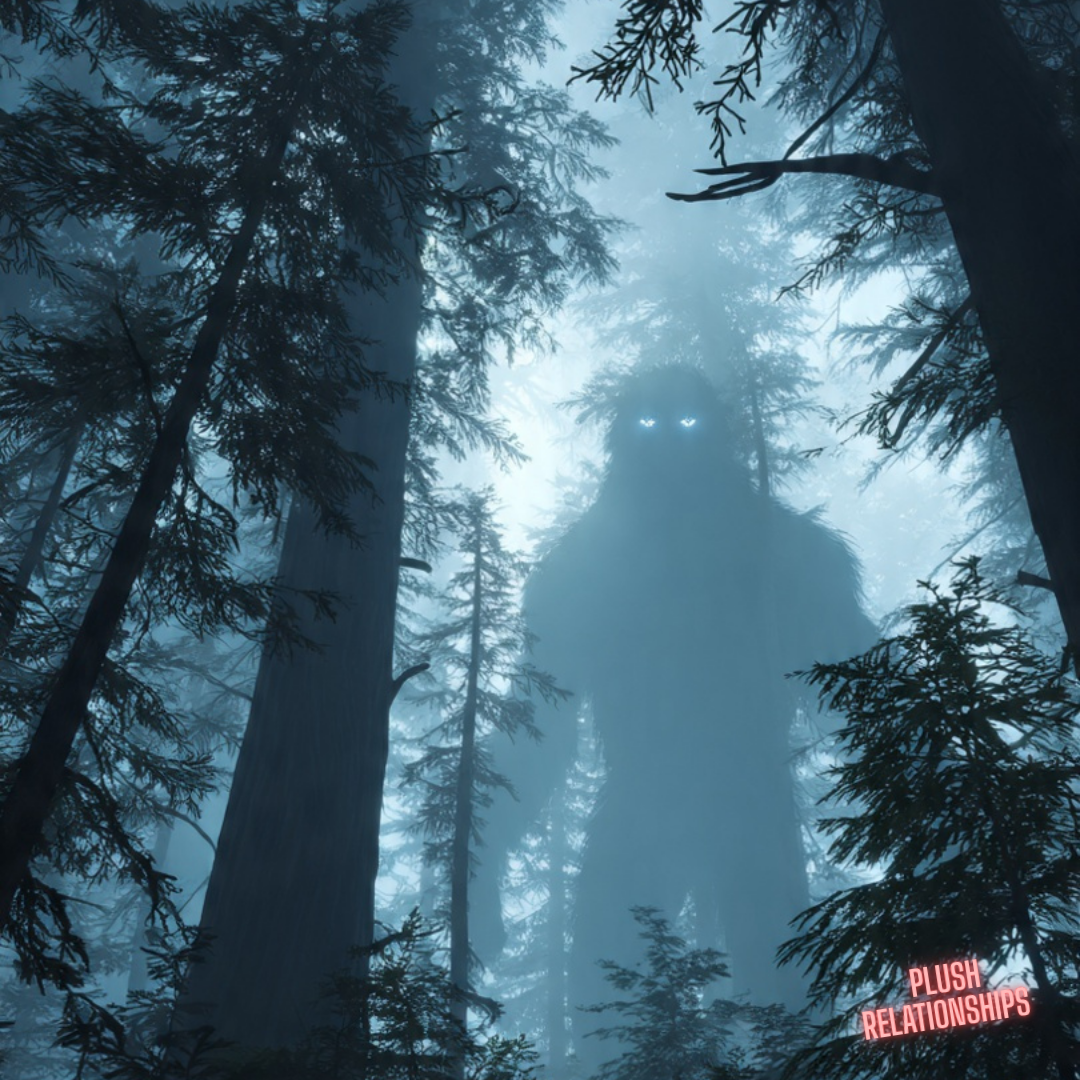
Bigfoot and the Forgotten Hominids — The Sibling Species
What if the "monsters" we share campfires about are actually the last surviving members of our own family tree?
For generations, mainstream institutions have pushed a very specific narrative: that any mention of a massive, upright, hairy hominid navigating the dense, untamed wilderness of North America or Asia is nothing more than a campfire myth. We’re told it’s just a misidentified bear walking on its hind legs, a figment of overactive imaginations, or a prankster in a cheap rubber suit.
But when you strip away the Hollywood monster tropes and look at this phenomenon through the strict lenses of evolutionary biology, anthropology, and deep ecology, the perspective completely shifts. Bigfoot stops looking like a fantasy cryptid and starts looking like an undeniable scientific probability: a relict hominid.
The Historical Precedent: Gigantopithecus Blacki
Mainstream anthropology openly admits that massive, upright, ape-like giants are not science fiction. The fossil record completely validates the historical existence of Gigantopithecus blacki.
Standing up to 10 feet tall and weighing an estimated 1,200 pounds, this massive hominoid coexisted with early human ancestors in the dense forests of Asia.
While standard textbooks claim Gigantopithecus died out hundreds of thousands of years ago, ancient cave art and deeply rooted indigenous oral histories suggest a much longer overlap. The physical blueprint for a giant, upright, forest-dwelling hominoid isn't a myth—it is a proven, biological reality in Earth's recent structural history.
The Overcrowded Family Tree
The old-school textbook graphic showing a neat, single-file line of monkeys slowly straightening up into a modern businessman is an entirely outdated evolutionary myth. Human evolution was never a lonely, linear march.
In reality, Homo sapiens are the anomaly for being the only ones left. Just a biological blink of an eye ago, our planet was home to at least five different human-adjacent species living simultaneously, including Neanderthals, Denisovans, and Homo floresiensis.
To assume that every single large, cold-adapted sibling species was perfectly wiped out down to the very last individual violates basic ecological rules. This is especially true when you consider that millions of acres of dense, mountainous, and virtually impenetrable wilderness across the Pacific Northwest, the Canadian boreal forests, and the Siberian taiga remain entirely untouched by modern civilization. In ecology, when a species retreats from a dominant predator, it seeks refuge in remote, specialized ecological niches—which is precisely where these sightings occur.
The Indigenous Consensus: Sibling Species, Not Monsters
Long before European colonization, and centuries before the word "Bigfoot" was ever coined by modern media, hundreds of indigenous tribes across North America independently documented these beings.
Crucially, they did not treat them as magical spirits or terrifying monsters. They treated them as a real, physical, flesh-and-blood sibling branch of the human family tree.
The Coast Salish people used the word Sasq'ets (the root of the word Sasquatch), translating generally to "wild man of the woods." Across various tribal laws and languages, these beings were recognized as a highly intelligent, reclusive population that mastered deep forest camouflage and stealth as a direct survival mechanism against aggressive human territorial expansion. They aren't a missing link; they are a parallel branch that simply chose a different evolutionary path.
Fact:
Gigantopithecus blacki is a real, scientifically classified giant hominoid that absolutely coexisted with ancestral humans.
Fact:
Genetic and fossil discoveries have proven that Homo sapiens routinely shared the planet with multiple other hominid species throughout history.
Fact:
Global indigenous records consistently classify these beings as physical, intelligent cousins of humanity, long predating modern pop-culture hoaxes.
When we look past the sensationalized headlines, the mystery of the "Wild Man" ceases to be a ghost story. It becomes a fascinating study in hidden zoology, ecological refuges, and the forgotten chapters of our own evolutionary history.